Building a new home or purchasing a recently built one comes with a certain expectation: if it has passed inspection and meets code, it must be energy-efficient. Unfortunately, that’s not always the case. Many homes still allow conditioned air to escape through hidden gaps, lose valuable heat through the attic, and pull moisture from the crawl space.
Delaware sits in IECC Climate Zone 4A (mixed-humid), with humid summers, cold winters, and year-round moisture pressure from the Atlantic and Chesapeake. This means that easily overlooked issues can lead to drafts, uneven temperatures, higher utility bills, and moisture-related problems that affect comfort and durability over time. The good news is that three improvements deliver the biggest impact for an energy-efficient Delaware home: (1) air sealing to stop uncontrolled air leakage, (2) attic insulation R-49, and (3) crawl space insulation and moisture control.
ENERGY STAR reports that air sealing, combined with adding insulation, saves homeowners an average of 15% on heating and cooling costs. Choosing the right insulation for your Delaware home goes far beyond energy efficiency, but also plays a major role in overall home comfort.
Why Delaware’s Climate Zone 4A Sets the Rules
Before choosing insulation materials or deciding where to invest, it’s important to understand Delaware’s climate.
All three Delaware counties—New Castle, Kent, and Sussex—are located in IECC Climate Zone 4A, which the U.S. Department of Energy classifies as a mixed-humid climate. That means homeowners deal with both significant heating demands in winter and cooling demands in summer, along with elevated moisture levels influenced by the Atlantic coast and Chesapeake Bay.
Because moisture management is just as important as thermal performance, insulation alone isn’t enough. A successful strategy must address both heat transfer and moisture movement throughout the home.
The U.S. Department of Energy notes that heating and cooling account for the largest share of a typical home’s energy use and that proper insulation reduces both energy costs and the carbon footprint. For Climate Zone 4, ENERGY STAR recommends approximately R-49 attic insulation, R-19 in floors over unconditioned space, and R-10 continuous / R-13 batt in basement and crawl space walls. However, the R-value isn’t enough in a humid zone; the University of Maryland Extension says addressing both heat flow and moisture is crucial in Climate Zone 4A. Delaware currently follows the 2018 International Energy Conservation Code (IECC), making these recommendations especially relevant for anyone planning to insulate new construction Delaware homes correctly.
Must-Have #1: Air Sealing
When creating an energy-efficient new home Delaware homeowners can enjoy year-round, air sealing should always come first.
Every home contains small gaps and penetrations around plumbing, wiring, recessed lighting, windows, doors, top plates, and attic access points. These openings allow conditioned indoor air to escape while humid outdoor air enters the building envelope.
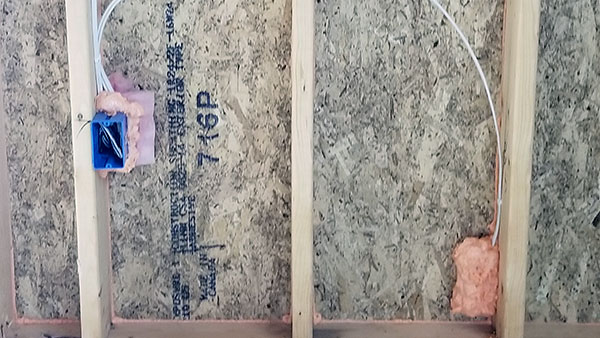
In Delaware’s mixed-humid climate, uncontrolled air leakage does more than waste energy. It can also carry moisture into wall cavities, attics, and floor systems, where it may contribute to mold growth, wood deterioration, and reduced insulation performance over time.
Simple improvements such as weatherstripping and caulking can address some minor leaks. However, larger penetrations and hard-to-reach areas often require more complex solutions for professional air sealing applications.
Because insulation cannot stop moving air on its own, sealing leaks before insulating is one of the most cost-effective improvements homeowners can make. ENERGY STAR estimates that air sealing, combined with insulation upgrades, saves homeowners about 15% on heating and cooling costs.
For larger projects, consider investing in professional air sealing to ensure hidden leaks are properly addressed.
Must-Have #2: Attic Insulation
After air sealing, attic insulation becomes the next priority. Heat naturally moves toward cooler areas, and because warm air rises, an under-insulated attic can become one of the largest sources of energy loss in a home. That’s why attic insulation Delaware homeowners install should be designed to reach approximately R-49 levels in Climate Zone 4A.
Before adding insulation, attic floor penetrations should be air sealed. While insulation slows heat transfer, it does not stop air movement on its own. Several insulation options can work well depending on the home’s design and goals:
Blown-In Fiberglass Attic Insulation
Blown-in fiberglass attic insulation is a cost-effective way to achieve recommended R-values across large attic floors. It provides consistent coverage over irregular spaces but requires separate air sealing and may settle somewhat over time.
Fiberglass Batt Insulation
Fiberglass batts remain a popular and budget-friendly choice for accessible attic framing. Performance depends heavily on proper installation with minimal gaps or compression.
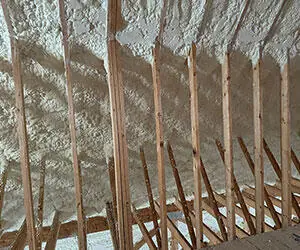
Spray Foam at the Roof Deck
In homes where HVAC equipment is located in the attic or where homeowners want a conditioned attic space, spray foam insulation installed at the roof deck can provide both insulation and air sealing in a single application.
No single material is right for every home. The best solution depends on attic design, budget, and overall performance goals. Learn more about available attic insulation options for Delaware homes.
Must-Have #3: Crawl Space Insulation
The final must-have is often the most overlooked. An uninsulated crawl space sits directly above damp soil and is constantly exposed to ground moisture. In coastal Delaware, this can create uncomfortable first-floor temperatures, elevated humidity levels, poor indoor air quality, and conditions that contribute to mold, pest activity, and structural deterioration.
An encapsulated crawl space addresses these concerns by combining moisture management and insulation into a complete system. Effective crawl space moisture control typically includes a ground vapor barrier, proper drainage, air sealing, and insulation along the crawl space perimeter walls.
Many modern systems use closed-cell spray foam on foundation walls because it helps control both heat transfer and water vapor movement. This dual benefit is particularly valuable in Climate Zone 4A, where humidity is a year-round consideration.
It’s also important to avoid relying on exposed fiberglass batts in vented crawl spaces. During humid Delaware summers, moisture can accumulate in the insulation, reducing its thermal performance.
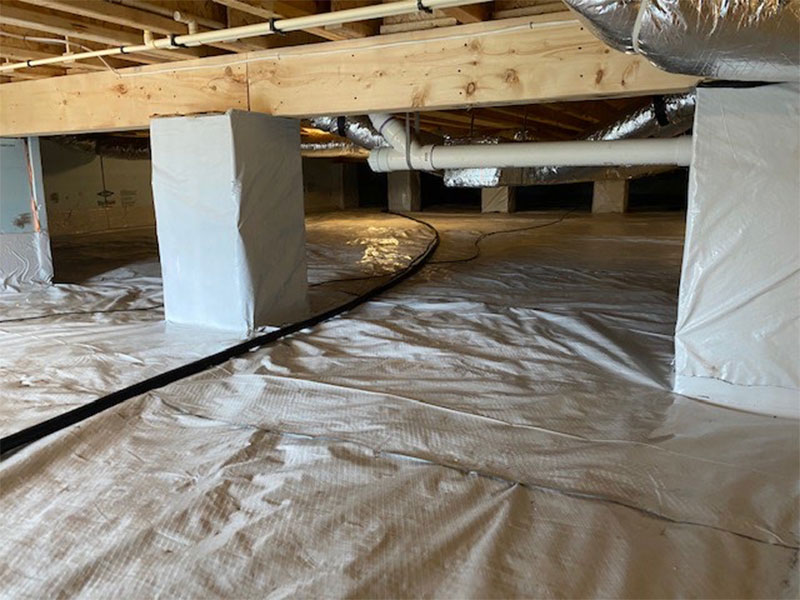
Properly designed crawl space insulation Delaware homeowners invest in can improve comfort, energy efficiency, and indoor air quality throughout the entire home.
Build a Better-Performing Delaware Home
If you’re building, buying, or upgrading a home in Delaware, focus on the three improvements that deliver the greatest return: air sealing Delaware homes to reduce unwanted air leakage, installing R-49 attic insulation, and implementing effective crawl space insulation for moisture control and thermal performance.
Because Delaware’s Climate Zone 4A requires managing both heat flow and moisture, these three upgrades work together to improve comfort, reduce energy use, and support long-term home durability.
For a deeper look at materials, R-values, and recommendations by area of the home, explore the right insulation for your Delaware home. When you’re ready to improve your home’s performance, Delmarva Insulation can help identify the best solution for your project.
References
Delaware Department of Natural Resources and Environmental Control. “Building Energy Codes.” Division of Climate, Coastal and Energy, dnrec.delaware.gov/climate-coastal-energy/efficiency/building-energy-codes/.
ENERGY STAR. “Methodology for Estimated Energy Savings from Sealing and Insulating.” U.S. Environmental Protection Agency, www.energystar.gov/saveathome/seal_insulate/methodology.
ENERGY STAR. “Recommended Home Insulation R–Values.” U.S. Environmental Protection Agency, www.energystar.gov/saveathome/seal_insulate/identify-problems-you-want-fix/diy-checks-inspections/insulation-r-values.
Pacific Northwest National Laboratory. “Find My Climate Zone.” Building America Solution Center, U.S. Department of Energy, basc.pnnl.gov/building-assemblies/climate-zone-lookup.
University of Maryland Extension. “Home Energy: Insulation.” University of Maryland, extension.umd.edu/resource/home-energy-insulation.
U.S. Energy Information Administration. “Use of Energy in Homes.” Energy Explained, www.eia.gov/energyexplained/use-of-energy/homes.php.
U.S. Environmental Protection Agency. “What Are the Main Ways to Control Moisture in Your Home?” EPA, www.epa.gov/mold/what-are-main-ways-control-moisture-your-home.