Choosing the best insulation for Delaware homes isn’t as simple as picking a material off the shelf. Spray foam, fiberglass, mineral wool, and foam board are all marketed as the right insulation for Delaware home applications, but each performs very differently depending on where it’s installed and the climate it’s installed in.
In a mixed-humid environment like Delaware, generic advice falls short. The state lies in climate zone 4A, where humid summers, cold winters, and constant moisture pressure from the Atlantic and Chesapeake create a demanding environment. Choose the wrong material, or install the right one in the wrong place, and the result is uneven temperatures, higher energy bills, and in some cases, mold or rot inside the wall cavity.
This guide breaks down what Climate Zone 4A means for insulation decisions, compares the four most common materials, and shows where each performs best in a Delaware home.
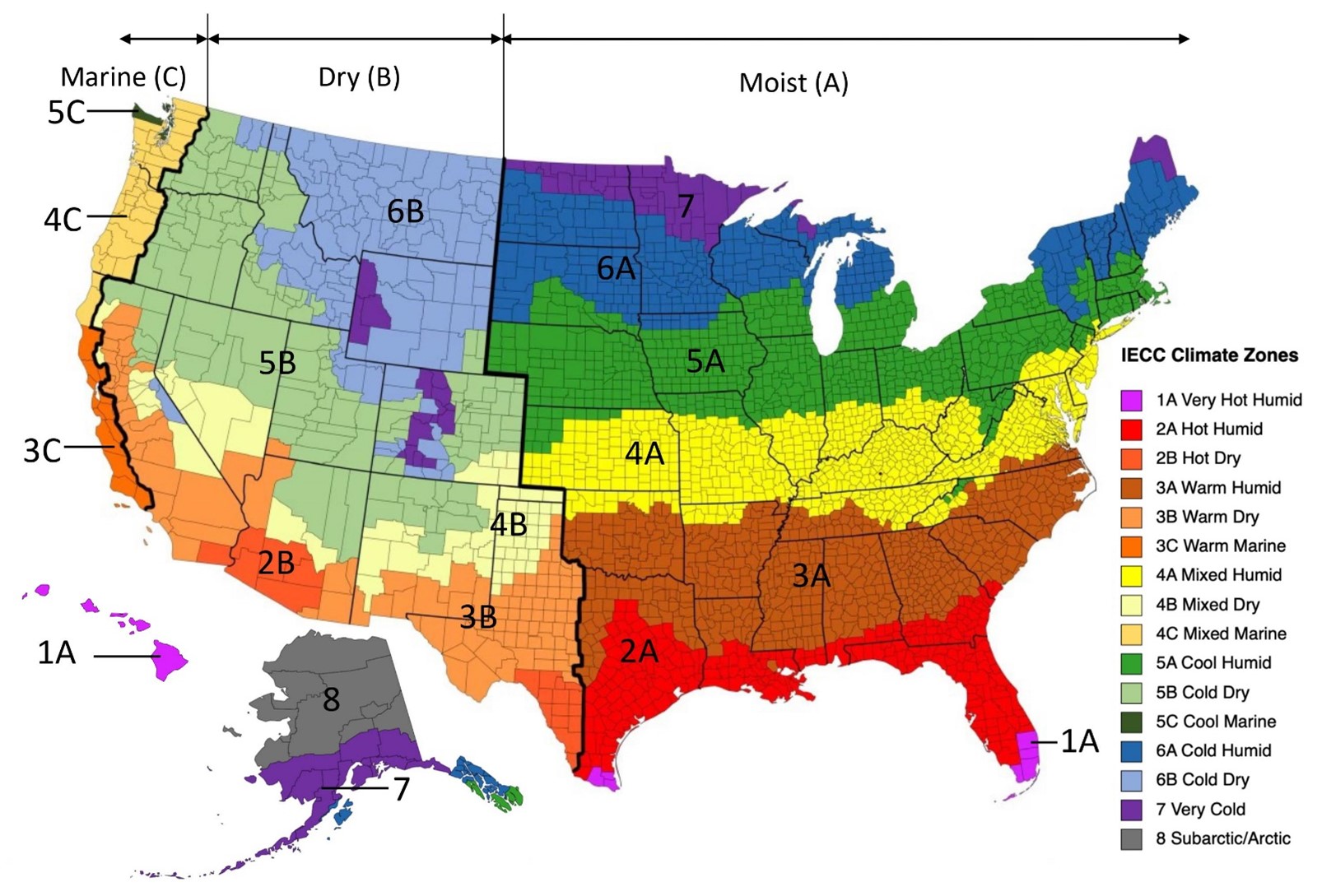
Delaware homes sit in IECC Climate Zone 4A (Mixed-Humid). For this zone, ENERGY STAR recommends approximately R-value Delaware targets of R-60 in attics, R-13 cavity plus R-5 continuous insulation in walls, R-19 in floors over unconditioned space, and R-10 to R-13 in basement and crawl space walls. The right product depends on the location: blown-in fiberglass or cellulose for attics, fiberglass batts or dense-pack for walls, closed-cell spray foam insulation for crawl spaces and rim joists, and rigid foam board for foundation perimeters.
Not sure whether your current insulation matches your climate zone—or where the gaps are? A home insulation evaluation can pinpoint exactly which areas to address first.
Why Delaware’s Climate Zone 4A Defines Your Insulation Strategy
What Climate Zone 4A Actually Means
All three Delaware counties—New Castle, Kent, and Sussex—fall within IECC Climate Zone 4A, classified as Mixed-Humid. This means the region experiences both heating and cooling demands throughout the year, along with elevated moisture levels due to its coastal geography, since Delaware’s eastern boundary is the Atlantic and the western boundary touches the Chesapeake watershed.
The U.S. Department of Energy notes that heating and cooling account for the largest share of a typical home’s energy use, and properly insulating a home reduces both energy costs and carbon footprint. In a climate like Delaware’s, insulation isn’t just about temperature control, it’s about managing moisture as well.
R-Value Targets for Zone 4A
ENERGY STAR recommends the following R-value Delaware targets for Climate Zone 4:
- Attic (uninsulated): R-60
- Attic (with existing 3-4 in. of insulation): R-49
- Floors: R-19
- Walls: R-13 cavity + R-5 continuous
- Basement/crawl space walls: R-10 continuous to R-13 batt
Delaware’s currently adopted residential energy code is the 2018 IECC (effective December 11, 2020), and DNREC’s Division of Climate, Coastal and Energy is reviewing the 2024 IECC for adoption. Most older homes, particularly those built before 2010, fall short of these targets, which is why upgrading attic insulation in Delaware and wall systems is one of the highest-impact improvements a homeowner can make.
The Moisture Variable
In a mixed-humid climate, R-value alone isn’t enough. The insulation strategy must account for vapor movement and air leakage. The University of Maryland Extension (covering the same Climate Zone 4A across the Eastern Shore) emphasizes that effective insulation for the region must address both heat flow and moisture.
This is the single biggest reason a Delaware-specific approach matters: the ‘best’ material in a dry climate may trap moisture in a humid one, and the ‘cheapest’ material may lack the air-sealing properties humid summers demand. Effective home energy efficiency Delaware strategies must account for heat flow, air leakage, and vapor movement.
The Four Insulation Materials Worth Considering
Spray Foam
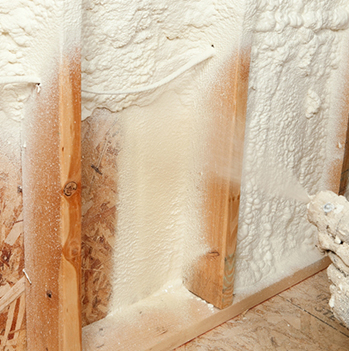
Spray foam insulation expands to fill cavities completely, making it the only insulation that both insulates and air-seals in one application. There are two types: open-cell (lower R-value per inch, more permeable) and closed-cell (higher R-value per inch, vapor-retarder properties, making it preferred for moisture-prone areas). It’s best fit is for Delaware for rim joists, crawl space walls, hard-to-reach attic geometries, and any location where air-sealing is a priority.
Fiberglass (Batts and Blown-In)
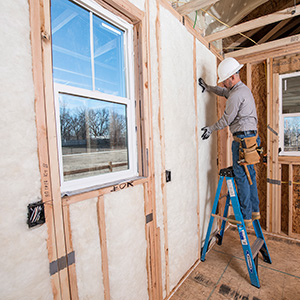
Fiberglass insulation is made largely from recycled glass. It’s non-corrosive, moisture-resistant, and the most cost-effective option per R-value. It’s available as pre-cut batts, used for open cavities and new construction, or loose-fill / blown-in, used for attics and dense-packed walls. It slows heat transfer but does not stop air movement, so pairing it with air sealing is essential to reach full performance.
Mineral Wool
Mineral wool insulation offers high density and durability. It is manufactured from natural rock or recycled slag, making it naturally fire-resistant and offers high thermal performance per inch. The higher density also makes it a strong choice for sound dampening between interior walls and floors. It’s more expensive than fiberglass but performs well where durability and moisture resistance matter.
Foam Board (Rigid Foam)
Foam board insulation provides high R-value per inch and strong moisture resistance. Made of lightweight rigid polystyrene or polyisocyanurate panels, foam boards provide a high R-value per inch and excellent moisture control. They are most often used as continuous exterior insulation on basement walls, under slabs, and at rim joists. It’s a higher upfront investment than fiberglass, but the continuous layer eliminates thermal bridging through framing.
Three Properties That Determine the Match
Choosing the right insulation for Delaware home applications comes down to:
- R-value: How well the material resists heat flow per inch, which directly determines whether you can hit the Zone 4A targets within the available cavity depth.
- Air-sealing capability: Whether the material itself blocks air movement, such as spray foam, or whether it requires a separate air-sealing step, as is the case with fiberglass, mineral wool, or foam board.
- Permeability: Whether the material allows controlled vapor transmission to prevent condensation inside wall cavities, which is critical in a humid coastal climate.
These factors determine which material works best in each part of the home.
Where Each Insulation Type Performs Best
Attics
Since heat rises, an under-insulated attic is the largest single source of energy loss in most Delaware homes. The best fit is blown-in fiberglass or cellulose to reach R-60 cost-effectively, with air-sealing of attic-floor penetrations done first. For homes with HVAC in the attic, spray foam insulation at the roof deck can create a conditioned space.
Walls
In new construction or full renovations, fiberglass insulation or mineral wool batts are typically installed in the wall cavity, ideally paired with R-5 continuous exterior foam board insulation to meet ENERGY STAR’s Zone 4 recommendations For existing homes without demolition, dense-pack blown-in fiberglass or cellulose can be injected through small access holes, restoring full cavity R-value performance without removing drywall. Proper air sealing at top plates, electrical penetrations, and around windows is essential before insulating, since fiberglass alone slows heat flow but does not stop drafts.
Crawl Spaces and Basements
Crawl spaces in coastal Delaware are a known moisture risk, making crawl space insulation essential. Closed-cell spray foam on the perimeter walls, or an encapsulated crawl approach, controls both heat and vapor. Foam board on basement walls provides a continuous thermal break and resists ground moisture. Avoid uncovered fiberglass batts in vented crawl spaces, as humid summer air can saturate the material and degrade performance.
Rim Joists and Hard-to-Reach Areas
Rim joists are a frequent and overlooked air-leakage point. Closed-cell spray foam handles both insulation and air-sealing in one pass.
Don’t Forget Air Sealing
Air sealing is essential to maximizing insulation performance.
ENERGY STAR estimates homeowners can save around 15% on heating and cooling costs by air-sealing and adding insulation in attics, floors over crawl spaces, and basements. ASU’s Energy Efficiency Center reinforces that the U.S. Department of Energy attributes nearly half of a typical home’s yearly energy costs to heating and cooling, and that appropriate insulation can save homeowners around 15% on energy bills. Without air sealing, even high-quality insulation won’t perform as expected.
Finding the Right Insulation for Your Delaware Home
There is no single best insulation for Delaware homes. The right solution depends on where it’s installed and how well it meets the demands of insulation in Delaware Climate Zone 4A.
The most effective approach combines:
- The right R-value targets
- Proper material selection
- Thorough air sealing
When each part of the home is insulated correctly, the result is better comfort, lower energy bills, and long-term protection against moisture damage.
If you’re unsure where your home stands, a professional evaluation can identify the gaps and help you prioritize the upgrades that matter most.
References:
Arizona State University Energy Efficiency Center. “Energy Savings by Insulation.” ASU Energy Efficiency Center, 11 July 2023, eec.asu.edu/2023/07/11/energy-savings-by-insulation/
Delaware Department of Natural Resources and Environmental Control. “Building Energy Codes.” Division of Climate, Coastal and Energy, dnrec.delaware.gov/climate-coastal-energy/efficiency/building-energy-codes/
ENERGY STAR. “Methodology for Estimated Energy Savings from Sealing and Insulating.” U.S. Environmental Protection Agency, www.energystar.gov/saveathome/seal_insulate/methodology
ENERGY STAR. “Recommended Home Insulation R–Values.” U.S. Environmental Protection Agency, www.energystar.gov/saveathome/seal_insulate/identify-problems-you-want-fix/diy-checks-inspections/insulation-r-values
Pacific Northwest National Laboratory. “Find My Climate Zone.” Building America Solution Center, U.S. Department of Energy, basc.pnnl.gov/building-assemblies/climate-zone-lookup.
University of Maryland Extension. “Home Energy: Insulation.” University of Maryland, extension.umd.edu/resource/home-energy-insulation
U.S. Energy Information Administration. “Use of Energy in Homes.” Energy Explained, www.eia.gov/energyexplained/use-of-energy/homes.php.