Living on the Delmarva Peninsula means Delaware homeowners must often face both hurricanes and nor’easters in the same storm season. Many homeowners generically prep for “a storm”, not understanding that wind-driven rain and pressure differentials can damage their home’s envelope in distinct ways depending on the type of storm.
Hurricanes are warm-core systems that bring heavy, short-duration, wind-driven rain and a real risk of internal pressurization if a window fails. Nor’easters are cold-core systems that bring longer, sustained wind-driven rain and coastal flooding that can linger for days. Both exploit the same weak points and gaps in your attic, crawl space, and air sealing. Understanding the differences between these storms is the first step in real fall storm home prep Delaware homeowners can count on.
A home insulation evaluation before storm season begins will help catch these weak points while there’s still time.
Nor’easters vs. Hurricanes: Same Coast, Different Storm Engines
What Actually Separates These Two Storm Types
Hurricanes and nor’easters may look similar on radar but have some key differences. The warm-core systems that form hurricanes draw their strength from warm tropical water, while the cold-core systems that form nor’easters draw their strength from cold air. Nor’easters form along the East Coast of North America and are named for the direction their strongest winds blow. They typically blow across the Mid-Atlantic and New England, bringing wind, snow, rain, and flooding. Unlike hurricanes, nor’easters can hit anytime of the year but are usually strongest from late fall to early spring.
Why Duration Matters More Than Category
While hurricanes can throw a mighty punch, they deliver their worst wind and rain over a short window of time. On the flip side, nor’easters can linger for days, extending the time your home’s envelope is exposed to wind-driven rain. The duration of the storm matters as much as a hurricane’s category for storm damaged building envelopes Delaware homes deal with every fall.
Storm Surge is a Shared, Not Exclusive, Threat
Another concern is storm surge, which both types of storms can bring. Strong onshore winds cause it and can push water well above normal tide levels, sometimes by many feet. When combined with high tide, the two can produce even higher water, making storm surges an even bigger danger for both coastal and inland homes.
Wind-Driven Rain and Pressure Differentials: Where the Envelope Fails First
The Envelope’s Job During Any Storm
Your home’s envelope has a big job during a storm: keeping wind, water, and debris out. A resilient building envelope works diligently to resist wind pressure, wind-borne debris, and wind-driven rain all at once. But any single weak point can undermine the whole system.
What Happens When Pressure Gets Inside
When your roof is damaged, or a window or door is breached, wind gets inside your home. This creates a compromised envelope that can lead to more damage to your home and its contents. This is one mechanism behind the pressure differences hurricane damage produces, since a sudden pressure change can stress your roof and walls from the inside out. Hardening your home against strong wind is the main goal of wind mitigation
Where Wind-Driven Rain Actually Gets In
After Hurricane Michael, recovery teams found that widespread wind damage to roof coverings, wall coverings, and windows and doors caused extensive water intrusion from wind-driven rain. That water intrusion can easily saturate your attic insulation, seep into the wall systems, and create conditions where algae and mold can begin to grow. Ensuring prompt moisture management and mitigation after a storm is imperative.
Flashing, Sealants, and the Small Gaps That Add Up
When water intrudes around your window and door openings, it can cause dry rot and fastener corrosion that weaken the surrounding frame. Proper flashing should be installed shingle-like, lapping top over bottom, and directing water down and out instead of behind it. These are small details, but they’re exactly where professional air sealing closes gaps, and a generic checklist misses
Fortifying Your Home’s Envelope Before Storm Season
Start With Air Sealing the Gaps Wind-Driven Rain Uses
Sustained nor’easter winds take their time to find every unsealed joint and penetration around your home’s plumbing, wiring, and framing. Professional air sealing closes those gaps to help keep that wind-driven rain and moisture outside before they become a bigger problem.
Protect the Attic from Saturation
When your roof coverings or ventilation components are compromised, wind-driven rain can saturate your attic insulation and reduce its performance. This type of attic insulation storm damage is easy to overlook until higher energy bills hit. Keep your attic insulation properly sealed to help it stay dry.
Address Crawl Space Moisture Before the Storm Hits
Crawl spaces are such low spaces that wind-driven rain and rising groundwater from coastal flooding tend to collect there first. Left alone, the crawl space moisture storm conditions can produce can lead to the growth of mold and mildew. Proper crawl space insulation and encapsulation help manage moisture before a storm arrives. Check out “Do You Have Moisture Problems in Your Crawl Space?” to learn more about keeping your crawl space dry.
Why Material Choice Matters After Water Exposure
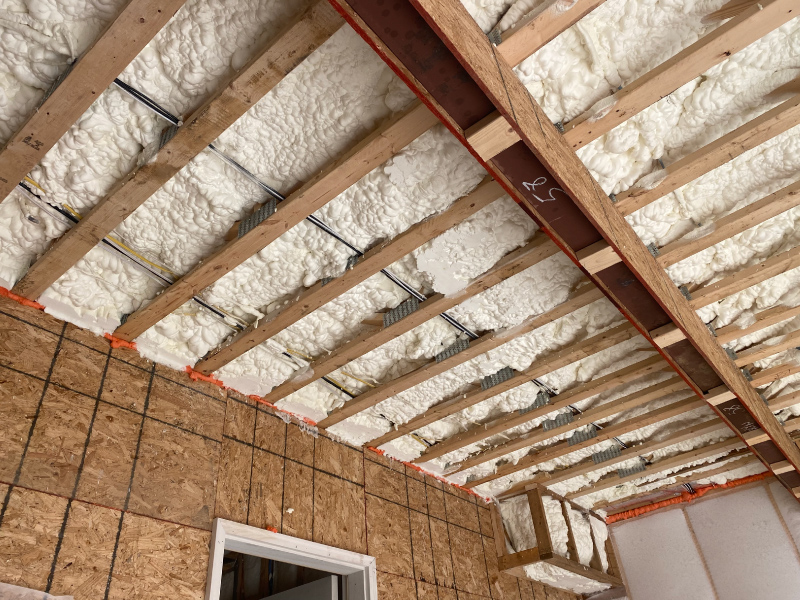
Not every insulation material handles water exposure the same way. In flood-prone areas, closed-cell spray foam insulation is the best choice. FEMA rates sprayed polyurethane foam and other closed-cell plastic foams as “acceptable” flood damage-resistant materials. Fiberglass, mineral wool, and open-cell or organic types of insulation are rated “unacceptable” in flood-prone areas because they do not provide a proper vapor barrier.
Know Your Envelope’s Weak Points Before the Forecast Turns
The best time to find gaps in your home’s envelope is before a storm is in the forecast, not after. A professional home insulation evaluation will explore the attic, crawl space, and air sealing together, so nothing gets missed. For a broader look at the different insulation materials commonly used for our climate zone, check out “Choosing the Right Insulation for Your Delaware Home: A Climate Zone 4A Guide.”
Frequently Asked Questions
Get Ahead of Fall Storm Season
Nor’easters and hurricanes may stress your home’s envelope in different ways, but they both exploit the same weak points: an under-protected attic, a damp crawl space, and unsealed penetrations. Real coastal storm prep Delaware homeowners can rely on starts with a proactive evaluation, not a repair call after storm damage is done.
At Delmarva Insulation, our insulation team will walk your home’s envelope with you to locate the areas in need and ensure they are ready before the next storm season begins. Contact us today to schedule your home insulation evaluation.
References
Federal Emergency Management Agency. “Fact Sheet 3.4.1: Building Utility Systems—Heating, Ventilation, and Air Conditioning.” FEMA.gov, U.S. Department of Homeland Security, https://www.fema.gov/sites/default/files/documents/fema_p-2181-fact-sheet-3-4-1-building-systems-HVAC.pdf.
Federal Emergency Management Agency. “Best Practices for Minimizing Wind and Water Infiltration Damage: Hurricane Michael in Florida Recovery Advisory 2.” FEMA.gov, U.S. Department of Homeland Security, https://www.fema.gov/sites/default/files/documents/minimizing-wind-water-damage_hurricane-michael_florida.pdf.
Federal Emergency Management Agency. “Reducing Water Intrusion Through Windows and Doors: Hurricane Ian in Florida Recovery Advisory 3.” FEMA.gov, Aug. 2023, https://www.fema.gov/sites/default/files/documents/fema_mat-hurricane-ian-recovery-advisory-3.pdf.
Federal Emergency Management Agency. “Flood Damage-Resistant Materials Requirements for Buildings Located in Special Flood Hazard Areas.” NFIP Technical Bulletin 2, Jan. 2025, https://www.fema.gov/sites/default/files/documents/fema_tb_2_flood_damage-resistant_materials_requirements_01-22-2025.pdf.
National Environmental Satellite, Data, and Information Service. “What Is a Nor’easter?” NOAA, https://www.nesdis.noaa.gov/about/k-12-education/severe-weather/what-noreaster.
National Environmental Satellite, Data, and Information Service. “What Is Storm Surge?” NOAA, https://www.nesdis.noaa.gov/about/k-12-education/oceans-coasts/what-storm-surge.
National Hurricane Center. “Storm Surge Overview.” NOAA, https://www.nhc.noaa.gov/surge/.