If you’re planning to insulate your home, one of the first questions you’re likely asking is, “How much will it cost to insulate my home?” The truth is that insulation costs vary widely because no two homes are the same. Your home’s design, age, existing insulation, and the material you choose all influence the final investment.
Delaware’s climate, with cold winters and hot, humid summers, makes proper insulation essential for year-round comfort. The right insulation helps regulate indoor temperatures, reduce energy use, and make your home more efficient year-round.
Below, we break down the factors that affect insulation cost, the typical investment tiers of common insulation materials, and the value insulation brings to your home over time.
I. Factors Affecting Insulation Cost
Local Climate and R-Value Needs
Delaware is located in a mixed-humid climate zone, meaning homes need protection from both winter cold and summer humidity. To achieve this, newer homes must meet higher R-value requirements, particularly in the attic.
- Modern Delaware homes typically need attic insulation rated at R-49 or higher.
- Future energy code updates may increase this minimum to R-60.
- Higher R-values require more material, pushing the project into a higher investment category.
R-value measures how effectively insulation resists heat flow. Higher R-values deliver better performance and often require a greater investment.
Home Size, Design, and Layout
The larger your home, the more material and labor the project requires. But square footage isn’t the only factor. Architectural features such as:
- Vaulted ceilings
- Cathedral or compact attics
- Bonus rooms over garages
- Complex layouts with many corners
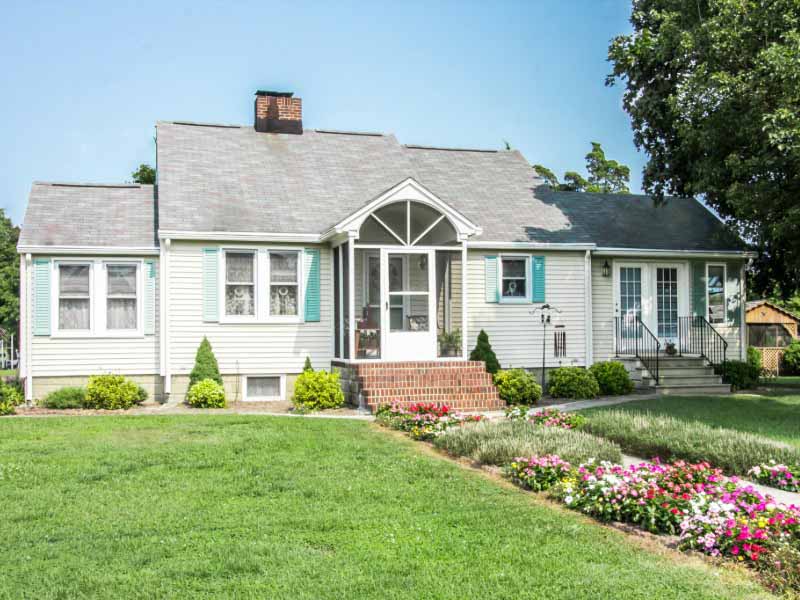
These features often increase installation time and material use. Many older Delaware homes also have additions or unique layouts that require customized installation methods. The more complex the design, the higher the investment level.
Age of the Home and Existing Insulation
Delaware’s older homes often require more extensive work, which affects cost. Older attics may contain only a few inches of insulation with R-values of R-19 to R-30, far below today’s recommended R-49+. Homes built before the 1970s may have no wall insulation at all, and adding insulation to finished walls requires drilling and dense-packing, increasing labor and driving up costs. In addition, replacing old insulation adds extra steps and costs. Damaged, wet, moldy, or compacted insulation must be removed before new material is installed—any removal or remediation needed before installation places the project in a higher investment tier.
Removal and Preparation Work
Before new insulation can be installed, some homes require additional preparation. Old, wet, sagging, or otherwise compromised insulation often needs to be professionally removed to ensure a clean, safe surface. This process adds labor and disposal time and may shift the project into a higher investment tier.
Any necessary repairs, such as fixing roof leaks, sealing air gaps, or addressing moisture issues, should be completed first to prevent future damage. Proper prep work, including air sealing in the attic and adding vapor barriers in crawl spaces, helps insulation perform at its highest level. The U.S. EPA notes that pairing air sealing with insulation can meaningfully reduce heating and cooling demands and save around 15% on bills, so it’s worth budgeting for these steps to maximize long-term comfort and efficiency.
Type of Project (Retrofit vs. New Construction)
New construction insulation is straightforward, as materials can be installed before drywall goes up, making it more efficient and typically more affordable.
Retrofit insulation, however, often requires additional steps such as drilling holes into finished walls, opening and repairing small drywall sections, and working around existing structures and wiring. Because of the extra labor and care required, retrofit projects generally fall into a higher investment tier than new construction. Delaware’s many historic and existing homes often require retrofit techniques. The Delaware DNREC noted that many families have cut energy bills through basic efficiency upgrades, including retrofitting renovations that improve insulation.
II. Insulation Types and Typical Investment Tiers
Fiberglass Insulation (Batts or Blown-In)
Investment Tier: Low
Fiberglass is typically the most affordable insulation option and is widely used for attics, walls, and crawl spaces.
- Available as batts or blown-in loose fill
- Provides reliable thermal performance
- Ideal for meeting building code requirements at a lower investment level
- R-value: Approximately R-2.5 to R-3.7 per inch
- Typically takes 15+ inches of blown fiberglass to achieve R-49 in an attic
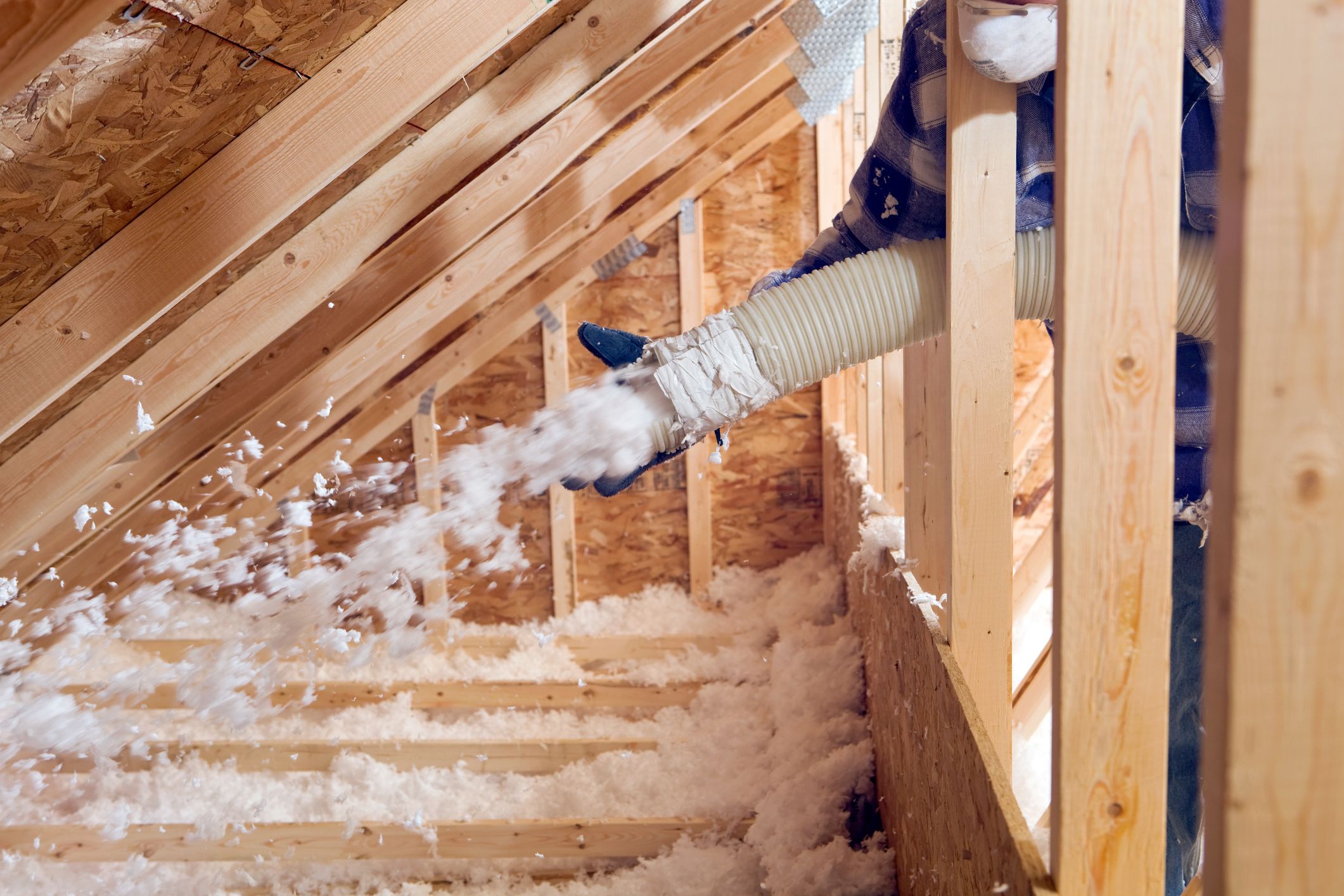
Best for: Attics, open wall cavities, and budget-minded upgrades.
Considerations: Does not provide air sealing on its own. Can lose effectiveness if poorly installed or wet.
Cellulose Insulation
Investment Tier: Low
Cellulose is made from recycled paper treated for fire resistance. It is a popular choice for blown-in attic applications and dense-packing wall cavities. Comparable in cost to fiberglass, dense-packed cellulose can reduce airflow better than loose fiberglass.
- Highly effective for topping off older attics
- R-value: Approximately R-3 to R-4 per inch
- Green choice due to recycled content
Best for: Attic upgrades and wall retrofits in older homes. Any dry, enclosed space with proper air sealing.
Considerations: Must remain dry and may gradually settle over time.
Mineral Wool
Investment Tier: Mid-Range
Mineral wool is a durable, high-performance alternative to fiberglass, made from rock or slag fibers. Homeowners often choose it when they want insulation that delivers both strong thermal performance and added safety benefits.
- Higher R-value per inch compared to standard fiberglass
- Naturally moisture resistant
- Non-combustible, offering enhanced fire protection
- Effective for sound dampening
Best for: Homeowners seeking enhanced fire safety or soundproofing at a reasonable cost.
Considerations: Typically requires professional installation.
Rigid Foam Board
Investment Tier: Mid-Range to High
Rigid foam board provides excellent thermal performance and moisture protection. Panels made of polystyrene or polyisocyanurate are installed in sheets, requiring cutting to fit and sealing at the joints.
- High R-value per inch- approximately R-4 to R-6.5, depending on the type
- Often used in basements, crawl space walls, and exterior sheathing
- Often used in combination with other insulation types
- Worthwhile investment for preventing heat loss through framing and insulating foundations
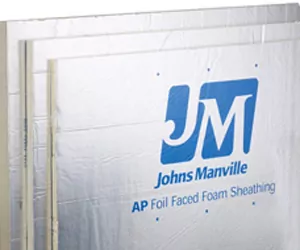
Best for: Foundations, exterior sheathing, and moisture-prone areas
Considerations: Achieving higher R-values such as R-10 to R-20 on walls may require multiple layers, raising the investment tier.
Spray Foam Insulation
Investment Tier: Premium
Spray foam is the highest-investment insulation option, but it also delivers the strongest overall performance. Applied as a liquid that expands into place, it fills cracks, gaps, and irregular surfaces while providing both insulation and air sealing in a single step. There are two types of polyurethane spray foam insulation:
- Open-cell foam is softer and lower density, making it excellent for sound absorption and ideal for interior applications where flexibility and sound control matter. It falls at the lower end of the R-value range, offering approximately R-3.5 per inch.
- Closed-cell foam is rigid and higher density, providing superior moisture resistance, added structural strength, and exceptional durability. It falls at the lower end of the R-value range, offering approximately R-6 to R-7 per inch.
Both types significantly reduce air leakage and help limit moisture intrusion, offering performance benefits that other insulation materials simply cannot match. Open-cell foam is generally a lower-investment version of spray foam, while closed-cell foam falls at the premium end of the tier.
Best for: Crawl spaces, rim joists, cathedral ceilings, and hard-to-seal areas
Considerations: Long-term energy savings and comfort improvements often offset the upfront cost.
III. Value of Insulation: Energy Savings and Comfort
When evaluating insulation, it’s important to consider long-term value and return on investment, not just the upfront cost. Adding insulation and sealing air leaks can significantly reduce heating and cooling demands, leading to meaningful savings over time. Delaware’s energy agencies consistently highlight that efficiency upgrades, especially insulation, produce noticeable reductions in monthly utility bills. Because insulation lasts for decades, the energy savings it generates can offset a substantial portion of the initial installation cost, making it one of the most cost-effective home improvements available- not to mention the tangible benefits of upgraded insulation.
Comfort
- Fewer drafts
- More consistent temperatures
- Improved humidity control
- Better indoor air quality
Home Protection
- Helps prevent moisture-related issues
- Protects your home’s structural components
- Makes your home more appealing to future buyers

Insulation is largely maintenance-free once installed, working for decades to protect and benefit your home. At the end of the day, insulation is one upfront payment that yields continual savings through lower heating/cooling costs and a more livable home.
IV. Making an Informed Insulation Decision
The most accurate way to understand your insulation costs is through a professional evaluation. A specialist will assess:
- Current insulation levels
- Attic, wall, and crawl space conditions
- The best insulation type for your home and goals
- Ideal R-values for Delaware’s climate
- Any necessary prep work
For many homeowners, a strategic approach works best. For example, choosing premium spray foam in areas with severe air leakage and using low-investment fiberglass in open attics. When choosing insulation, the cheapest option isn’t always the best—your goal is to select materials that will perform well over the long term. A strategic approach often works best: for example, investing more in spray foam for a leaky crawl space while using a low-investment material like fiberglass in an accessible attic. For new construction, it’s smart to plan insulation early and discuss R-values and material choices with your builder. Older homes may benefit from an energy audit or insulation inspection to identify gaps and hidden inefficiencies. Many Delaware homeowners are surprised to learn that insulation upgrades can often be completed in just a day or two. Ultimately, insulation should be viewed as an investment that delivers lower energy bills, improved comfort, better home durability, and protection against rising heating and cooling costs in the future.
Tips for Getting the Best Results
- Get multiple quotes when possible
- Ensure each quote specifies insulation type and R-values
- Ask about warranties or guarantees
- Consider an energy audit for older homes
V. Conclusion
The cost of insulating a Delaware home can vary widely depending on the scope of the project, from small upgrades to full-home installations. Understanding the factors that influence pricing and the investment tiers of different insulation types helps you budget with confidence and choose the solution that best fits your goals.
If you’re ready to improve your home’s comfort and efficiency, contact Delmarva Insulation for expert guidance and a free estimate. Our team will help you find the right insulation option for your budget and ensure a more comfortable, energy-efficient home for years to come.
References:
Delmarva Insulation. (n.d.). Correct insulation for Delaware home. Delmarva Insulation. https://delmarvainsulation.com/blog/correct-insulation-for-delaware-home/
Delmarva Insulation. (n.d.). Fall energy saving tips Delaware. Delmarva Insulation. https://delmarvainsulation.com/blog/fall-energy-saving-tips-delaware/
Delmarva Insulation. (n.d.). Five ways to beat cold temps now. Delmarva Insulation. https://delmarvainsulation.com/blog/five-ways-to-beat-cold-temps-now/
Insulation Institute. (2020). Delaware code [PDF]. Insulation Institute. https://insulationinstitute.org/wp-content/uploads/2020/08/DE_Code-FINAL.pdf
ProMatcher. (n.d.). Insulation cost in Delaware. ProMatcher. https://insulation.promatcher.com/cost/delaware.aspx
U.S. Department of Energy. (n.d.). Guide to home insulation [PDF]. Energy.gov. https://www.energy.gov/sites/prod/files/guide_to_home_insulation.pdf