Every spring, Delaware homes face the same cycle: rain soaks the ground, snowmelt saturates the soil, and unconditioned or vented crawl spaces absorb that moisture directly. What most homeowners don’t realize is that their crawl space is quietly collecting moisture all season long, and that a poorly sealed or vented system becomes a direct pipeline for humidity, mold, and energy loss into the living space above.
According to the EPA, crawl spaces with high relative humidity are common sites of hidden mold growth, especially those with bare-earth floors, where soil moisture rises through capillary action and evaporates into the air. That air, along with mold spores and allergens, doesn’t stay below your home. It moves upward through cracks and gaps, affecting indoor air quality and comfort. A spring crawl space inspection catches these problems early — and for homes with persistent moisture issues, sealing and conditioning the crawl space eliminates the source, not just the symptoms.
A crawl space inspection Delaware homeowners perform in spring should cover moisture intrusion, the condition of the vapor barrier, insulation status, air sealing at the rim joist, and any signs of pest or mold activity. Homes with persistent dampness or high humidity should consider a conditioned crawl space — sealed, insulated, and vapor-controlled — which the DOE reports can reduce space-conditioning energy use by 15–20% compared to a vented crawl space.
Not sure what you’re looking at in your crawl space? A professional evaluation can tell you exactly what your home needs.
The Spring Crawl Space Inspection Checklist
A proper spring crawl space checklist goes beyond a quick look. Here’s what to check, and why each item matters.
1. Moisture and Water Intrusion
Look for standing water, damp soil, or water stains on foundation walls. These are direct signs that drainage around the home is allowing water to enter. The EPA’s moisture guidance notes that ground slope and drainage should direct water away from the foundation. In Delaware, spring rain and snowmelt can saturate the soil quickly. When water isn’t directed away from the foundation, it seeps into the crawl space, increasing humidity and setting the stage for mold and wood rot. Addressing crawl space moisture in Delaware homes starts here.
2. Vapor Barrier Condition
A properly installed crawl space vapor barrier is one of the most important defenses against moisture.
Check for:
- Tears or punctures
- Gaps between seams
- Pooling
- Areas where the barrier isn’t secured
The DOE recommends a continuous ground cover to prevent upward migration of soil moisture. Without it, moisture evaporates directly into the crawl space air, raising humidity levels and undermining insulation performance.
3. Insulation Status
Inspect your crawl space insulation in Delaware homes, especially at the rim joist and along walls.
Look for:
- Sagging fiberglass batts
- Wet or compressed insulation
- Missing sections
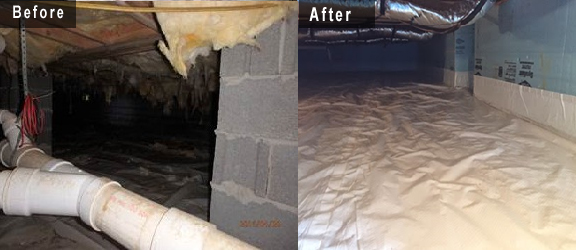
Delaware falls in IECC Climate Zone 4A, where proper insulation levels are critical. Under Delaware’s adopted 2018 IECC (effective December 11, 2020), crawl space walls in conditioned spaces must meet R-13 or R-10 continuous insulation. Wet fiberglass loses most of its insulating value, meaning your home is likely losing energy even if insulation is technically present.
4. Air Sealing at the Rim Joist
The rim joist is one of the most common air leakage points in a Delaware home. Gaps here allow both moisture-laden outdoor air and pests to enter the conditioned envelope. The DOE identifies air sealing the rim joist as a critical step in conditioning a crawl space.
Proper air sealing at the rim joist is essential for controlling both moisture and energy loss. In many cases, spray foam crawl space applications provide the most effective solution by sealing and insulating in one step.
5. Signs of Mold or Musty Odors
Any musty smell or visible growth should be treated as an active moisture problem.
The EPA notes that mold can grow on virtually any organic material when moisture is present. In crawl spaces, that includes wood framing, insulation, and even dust buildup. If left unchecked, this can lead to structural damage and indoor air quality issues.
For homeowners concerned about crawl space mold prevention in Delaware, early detection is critical.
6. Pest Entry Points
Gaps in foundation walls, openings around pipes, and unprotected vents can allow insects and rodents to enter. Check for droppings, nesting material, or visible entry points. Once inside, pests can damage insulation, worsen air leakage, and create additional health concerns.
Vented vs. Conditioned — What’s the Difference?
Many older homes in Delaware still use vented crawl spaces. These were originally designed to allow outdoor air to circulate and “dry out” the space. In reality, this approach backfires in humid climates. Warm, moist outdoor air enters through vents and condenses on cooler surfaces inside the crawl space. Instead of drying the space, it introduces more moisture, increasing the risk of mold, rot, and insulation failure.
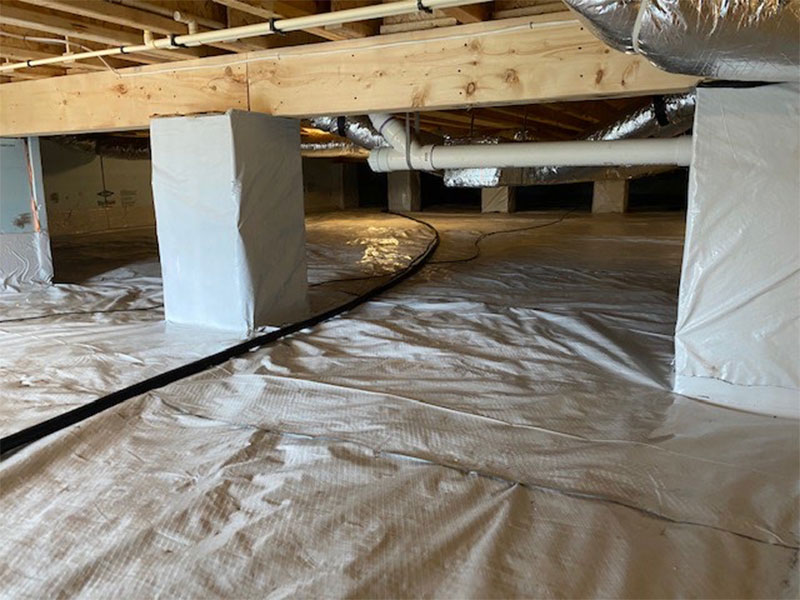
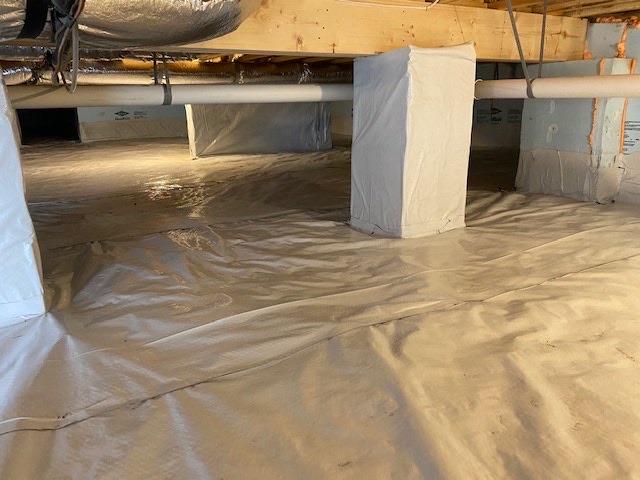
On the other hand, a conditioned crawl space is sealed, insulated at the foundation walls, and covered with a continuous vapor barrier. It is treated as a small, clean basement rather than an open outdoor space. The DOE reports that sealed, insulated crawl spaces can cut space-conditioning energy use by 15–18% compared to vented crawl spaces.
Beyond energy savings, they also:
- Improve comfort in the floors above
- Reduce the risk of frozen pipes
- Lower long-term moisture damage
For homeowners focused on Delaware home energy efficiency, this is often the most effective long-term upgrade.
When to Call a Professional
A DIY inspection is a good starting point, but some issues require expert evaluation.
Call a professional if you find:
- Standing water or repeated moisture intrusion after rain events
- Visible mold growth covering more than 10 square feet, which is the EPA’s threshold for professional remediation
- Fiberglass batt insulation that is sagging, wet, or falling, since wet fiberglass loses most of its R-value and cannot be effectively re-dried in place
- Persistent cold floors in winter or high indoor humidity in summer- these are signs that the crawl space thermal envelope is failing
- Signs of pest infestation, as disturbing nests or damaged insulation without proper protection is a health risk
The DOE emphasizes that a properly sealed and insulated crawl space must function as a complete system. Partial fixes or improper installation can make moisture problems worse.
Solutions like spray foam insulation are especially sensitive to proper installation. When applied correctly, they seal air leaks and provide high-performance insulation. When done poorly, they can trap moisture and create new issues.
Frequently Asked Questions
Conclusion
Spring is the best time to identify crawl space problems, before summer humidity makes them worse and before winter brings cold floors back into focus.
This spring crawl space checklist covers the most common moisture, insulation, and air sealing failures found in Delaware homes. But for recurring moisture, sagging insulation, or crawl spaces that have never been properly sealed, a professional assessment is the only way to identify a complete, long-term solution.
Contact Delmarva Insulation to schedule a free crawl space estimate. Our team serves homeowners and builders throughout Delaware and Maryland’s Eastern Shore — and we’ll tell you exactly what your crawl space needs.
Delaware Department of Natural Resources and Environmental Control (DNREC), Division of Climate, Coastal and Energy. “Building Energy Codes.” State of Delaware, dnrec.delaware.gov/climate-coastal-energy/efficiency/building-energy-codes/.
Pacific Northwest National Laboratory. “Rigid Foam Board Insulation for Existing Band Joists.” Building America Solution Center, U.S. Department of Energy, basc.pnnl.gov/resource-guides/rigid-foam-board-insulation-existing-band-joists.
Pacific Northwest National Laboratory. “Unvented, Insulated Crawlspaces.” Building America Solution Center, U.S. Department of Energy, basc.pnnl.gov/resource-guides/unvented-insulated-crawlspaces.
U.S. Environmental Protection Agency. “A Brief Guide to Mold, Moisture and Your Home.” EPA, www.epa.gov/mold/brief-guide-mold-moisture-and-your-home.
U.S. Environmental Protection Agency. “Mold Course Chapter 2: Where Mold Grows.” EPA, www.epa.gov/mold/mold-course-chapter-2.
U.S. Environmental Protection Agency. “What Are the Main Ways to Control Moisture in Your Home?” EPA, www.epa.gov/mold/what-are-main-ways-control-moisture-your-home.