Delaware winters can take a toll on older homes. In a Climate Zone 4A home with a leaky attic or an open crawl space, you may notice your heating bills rising with every cold snap.
For households already stretched thin, this can be especially frustrating. Heat escapes through attics, crawl spaces, and gaps in the house, so the bills keep coming.
Delaware energy assistance programs offer two forms of help: assistance with energy bills and improvements that reduce heat loss.
The Delaware Energy Assistance Program (DEAP), funded through the federal Low Income Home Energy Assistance Program (LIHEAP), helps eligible households pay their energy bills.
The Department of Health and Social Services (DHSS) Division of Social Services oversees the program, and community partner agencies (Catholic Charities and First State Community Action Agency) take applications. Separately, the Department of Natural Resources and Environmental Control (DNREC) administers the Delaware Weatherization Assistance Program (WAP), which provides energy-conservation improvements at no cost to qualifying households.
If your income is above the limits, you can hire a private insulation and air sealing contractor whenever it suits you. A home insulation evaluation can show where heat escapes and help you decide which improvements to tackle first.
Delaware Energy Assistance Programs Available This Winter
Two Separate Programs, Two Separate Agencies
Applying to one program doesn’t automatically enroll you in the other. Each program has its own purpose, application process, and administering agency.
Delaware Energy Assistance Program (DEAP/LIHEAP)
The federal government funds DEAP, and the DHSS Division of Social Services manages it in partnership with community agencies throughout Delaware. To apply, use the ASSIST portal or contact a local agency for help by phone or in person.
Winter heating assistance in Delaware is available from October 1 to March 31. To qualify for Summer Cooling Assistance, you must submit a LIHEAP application earlier in the same program year.
Delaware Weatherization Assistance Program (WAP)
The Division of Climate, Coastal and Energy at DNREC runs Delaware’s Weatherization Assistance Program all year. This program is free for qualifying low-income households and is open to both homeowners and renters throughout Delaware. It’s funded by the U.S. Departments of Energy and Health and Human Services, plus state funds.
For help with applications and scheduling, call the Energy Coordinating Agency at 302-504-6111. For questions about the program, contact DNREC at 302-735-3480.
Why the Difference Matters
DEAP offers seasonal help with energy bills. WAP focuses on lasting improvements that reduce heat loss. State-program contractors install the approved measures.
Who Qualifies for the State’s Weatherization Assistance Program and What It Covers
Eligibility Basics
Eligibility depends on household size and income. DNREC lists the current limits in an income eligibility table on its program page.
Getting approved doesn’t mean you’ll get service right away. Delaware reviews each person’s situation and prioritizes older adults, people with special needs, and households facing more serious challenges. Funding limits how many households receive service each year, so some applicants will have to wait until another program year. If you haven’t received service within 12 months, you’ll need to reapply so the state can verify your income again.
What the State Program’s Contractors Install
The work done depends on your home’s condition and the energy assessment findings. Approved improvements may include:
- Air sealing, caulking, glazing, weather-stripping, and crack patching
- Replacing broken glass
- Attic, wall, and floor insulation, along with ventilation
- Heating and cooling duct sealing
- Water heater and pipe insulation
- One heating-system maintenance check
- Energy-efficient light bulbs and educational materials

The Process
A trained professional begins with a free home energy assessment for Delaware households that are eligible. This identifies where energy is being lost and determines what improvements the state program can provide.
A contractor working for the state program installs the recommended improvements. A certified quality-control inspector then checks the completed work and signs off. Several visits may be needed. An adult age 18 or older must be present whenever contractors are working in the home.
What the Program Will Not Do
WAP is intended to reduce household energy use, not cover general home repairs. The program doesn’t cover routine replacement of windows, doors, or furnaces, or the installation, service, or repair of air conditioners. Minor repairs are allowed only when necessary to install an approved energy-saving measure.
Winter Protections and What to Do While You Wait
If you’re waiting for assistance, you still need to manage heating bills. Delaware termination regulations offer some protections from winter shutoffs, and fixing heat loss can make your home more comfortable while you wait.
Delaware’s Heating-Season Termination Rules
The Delaware utility shutoff rules for winter come from 26 DE Admin. Code 3002, which defines the heating season as November 15 through March 31.
For regulated electric and gas providers, the requirements include:
- At least 14 calendar days’ written notice before termination for nonpayment
- Two documented phone contact attempts on separate days during heating season, including one after 6 p.m.
- Information about installment agreements and assistance-agency referrals in the termination notice
During the heating season, regulated providers cannot terminate service for nonpayment on a day when the National Weather Service reports an 8 a.m. temperature of 32°F or below at a Delaware location within 50 miles of the residence.
Termination is also prohibited when the provider receives a certification from a licensed Delaware physician or accredited Christian Science practitioner stating that disconnection would adversely affect an occupant’s health or recovery.
These protections don’t cancel unpaid bills, but they give you more options and time to seek assistance.
Insulation and Air Sealing Pay Off in a Mixed-Humid Winter
All three Delaware counties fall within IECC Climate Zone 4A, classified as mixed-humid in the county climate zone guide. Homes here must handle heating and cooling demands, as well as humidity, year-round.
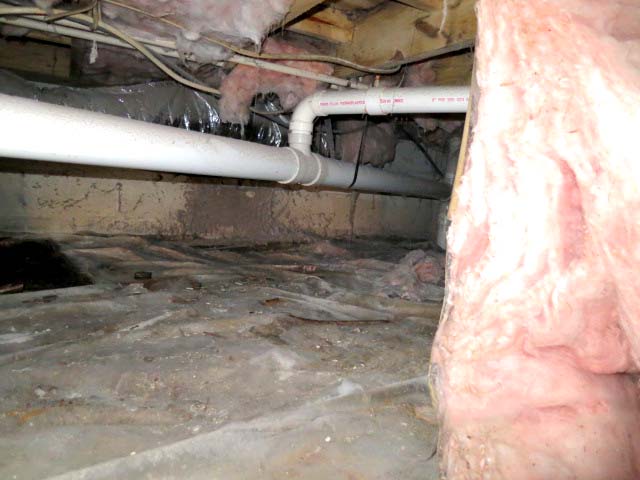
In many older Delaware homes, heat escapes through the attic and crawl space. Openings around pipes, wiring, and framing contribute to the problem. Floors with insufficient insulation can also make rooms above a crawl space feel colder in winter.
Homeowners can save an average of 15% on heating and cooling costs by sealing air leaks and adding insulation in attics, floors above crawl spaces, and accessible basement rim joists. With air sealing and insulation in
Delaware, the order the work is done is important. Seal air leaks first, then insulate. Managing crawl space moisture also helps insulation perform properly and can improve comfort in the rooms above during winter.
Delmarva Insulation is a private insulation and air sealing contractor and is not part of the state Weatherization Assistance Program. If you hire a private company, professional air sealing can address hidden leaks before installing more insulation.
If You Are Over the Income Limit
If your household income is above the state limits, you can hire a private contractor for attic insulation, crawl space improvements, and air sealing. You don’t have to join the state program’s waiting list and can schedule work whenever it suits you.
Start with a whole-home evaluation before choosing an insulation product. This way, you’ll know what needs fixing first.
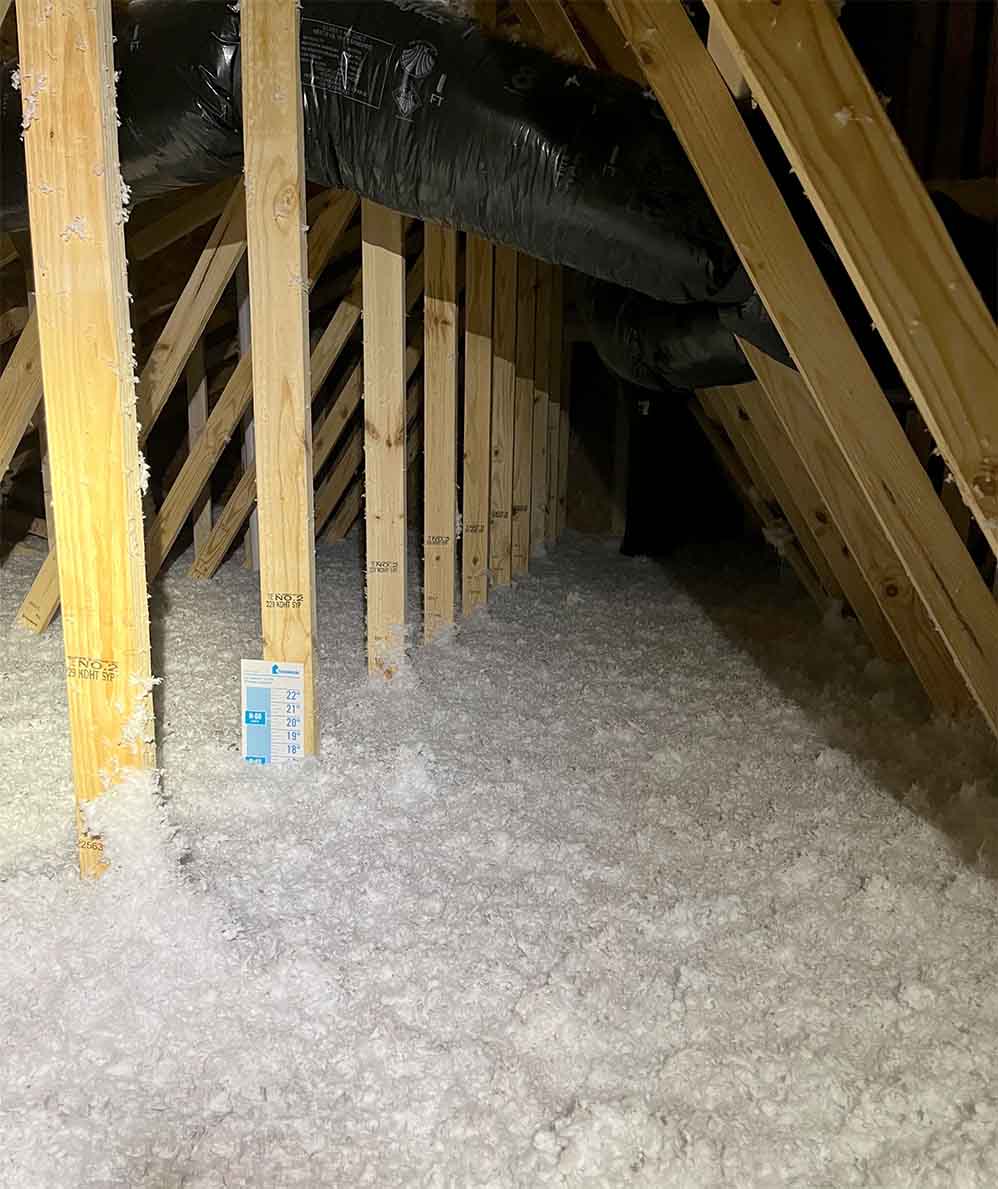
If you’re considering attic insulation in Delaware this winter, check for gaps around ceiling openings and areas without enough insulation. If your attic lacks proper insulation, an upgrade can reduce heat loss from the rooms below. Attic insulation is one option for existing homes that need an upgrade.
Small changes around the house can also make a difference. These Delaware energy-saving tips give you practical ways to manage energy use during colder months.
FAQS
Two Tracks for Winter Help in Delaware
Delaware households can seek bill assistance through DEAP at DHSS or apply for the free Weatherization Assistance Program through DNREC. Because applying doesn’t guarantee service in the same heating season, it’s a good idea to start early.
Even if your household doesn’t qualify for state assistance, your home can still lose heat through gaps and poorly insulated areas. Before the coldest part of winter, schedule a home insulation evaluation with Delmarva Insulation to find where insulation and air sealing will help most.
Keeping more heat inside your home can make your rooms more comfortable and help you manage your heating costs.
References
“3002 Regulations Governing Termination of Residential Electric or Natural Gas Service by Public Utilities for Non-Payment During Extreme Seasonal Temperature Conditions.” Delaware Administrative Code, Title 26, Public Service Commission, regulations.delaware.gov/api/AdminCode/title26/3002/900460bd-0697-4c74-9371-1b3b9d0c569d.
Antonopoulos, Chrissi, et al. Guide to Determining Climate Zones by County: Building America and IECC 2021 Updates. PNNL-33270, Pacific Northwest National Laboratory, Sept. 2022, www.pnnl.gov/main/publications/external/technical_reports/PNNL-33270.pdf.
“Methodology for Estimated Energy Savings.” ENERGY STAR, U.S. Environmental Protection Agency, www.energystar.gov/saveathome/seal_insulate/methodology.
“Utility Assistance.” Delaware Health and Social Services, Division of Social Services, dhss.delaware.gov/dss/division-of-social-services/utility-assistance/.
“Weatherization Assistance Program.” Delaware Department of Natural Resources and Environmental Control, Division of Climate, Coastal and Energy, 19 Aug. 2026, dnrec.delaware.gov/climate-coastal-energy/energy-office/programs/wap/.